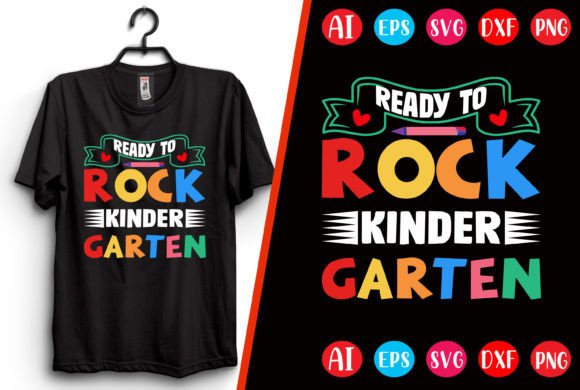
Ready to Rock Kindergarten T-shirt: A Practical Choice for Back-to-School Design Projects
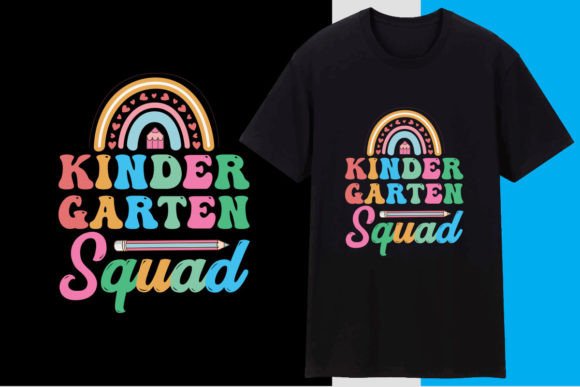
The Ready to Rock Kindergarten T-shirt is a digital design file intended for educators, parents, small-batch printers, and crafters preparing for the new school year. It’s not a physical shirt—it’s a versatile, print-ready asset that supports customization across apparel and merchandise. Unlike mass-produced retail tees, this design comes as an instant-download ZIP folder containing multiple vector and raster formats (AI, EPS, SVG, DXF, PNG), all sized at 4500×5400 pixels in RGB color mode. That resolution supports crisp printing on standard adult and youth t-shirts, tote bags, stickers, or classroom signage—provided your printer or cutting machine accepts those file types.
What Sets This Design Apart From Generic Back-to-School Graphics
Many back-to-school designs lean heavily on clichés: apples, pencils, chalkboards, or overly cutesy fonts. The Ready to Rock Kindergarten T-shirt avoids those tropes with clean typography, balanced negative space, and intentional energy conveyed through layout—not cartoonish imagery. Its “rock” motif suggests enthusiasm and confidence without relying on musical instruments or exaggerated graphics, making it adaptable for diverse classroom cultures and inclusive learning environments.
More importantly, its technical packaging reflects thoughtful preparation for real-world use. The inclusion of AI and EPS files means professional designers can adjust layers, edit text paths, or reposition elements without quality loss. SVG and DXF support laser cutting and vinyl plotting—useful for custom iron-ons or classroom decals. The high-resolution PNG offers immediate usability for digital mockups or social media previews, though it’s worth noting the transparent PNG mockup is not included, so users will need to source or build their own presentation visuals if needed.
How It Compares With Other Design Options
When evaluating digital design assets, three broad categories emerge: royalty-free stock graphics, custom-designed templates from marketplaces, and fully bespoke illustrations commissioned from designers. The Ready to Rock Kindergarten T-shirt sits firmly in the second group—but with notable distinctions.
- Stock graphics (e.g., from large libraries like Shutterstock or Freepik) often require additional licensing for commercial resale or multi-user teams. They also rarely include layered vector files optimized for apparel printing—many are flat JPGs or low-res PNGs.
- Marketplace templates vary widely in quality and flexibility. Some offer editable Canva links but lack true vector scalability; others include only one file format, limiting adaptation for screen printing versus heat transfer.
- The Ready to Rock Kindergarten T-shirt, by contrast, delivers five native formats in one download—each serving different production needs—and explicitly states it’s “easy to modify and change color,” which many generic listings omit or oversimplify.
This doesn’t mean it’s universally superior. If you need photorealistic kindergarten-themed scenes with children of varied ethnicities, or require ADA-compliant font sizing for accessibility handouts, this design won’t meet those goals—it’s intentionally minimalist and typographic. Similarly, if your project demands animated versions for digital newsletters or interactive PDFs, no motion assets are provided.
Strengths and Real-World Tradeoffs
Its primary strength lies in execution efficiency. Because the file includes both vector and high-res raster options, a school PTA coordinator can open the SVG in Cricut Design Space to cut vinyl letters for a bulletin board, while a local print shop uses the AI file to separate colors for screen printing 50 shirts. No conversion steps, no risk of pixelation, and no need to hire a designer just to swap a shade of blue.
However, that versatility comes with expectations. Users should have basic familiarity with design software—or willingness to learn. Opening an AI file requires Adobe Illustrator (or compatible alternatives like Affinity Designer); editing an EPS may involve legacy compatibility checks. Those using free tools like Inkscape can work with SVG and DXF, but might face minor rendering differences in complex gradients or transparency effects.
Color mode is another practical consideration. The file is delivered in RGB—not CMYK—which suits digital displays and most DTG (direct-to-garment) printers well. But traditional screen printers often prefer CMYK for accurate ink mixing. While conversion is possible, it requires manual adjustment to preserve vibrancy, especially with bright primaries common in kindergarten branding.
When This Design Fits—and When It Might Not
The Ready to Rock Kindergarten T-shirt is especially well-suited for time-constrained, small-scale projects where consistency and clarity matter more than elaborate illustration. Think:
- A preschool launching its first branded orientation event and needing matching staff shirts and parent welcome packets.
- A homeschool co-op organizing a “Kindergarten Kickoff” picnic and wanting coordinated, printable name tags and t-shirts.
- An Etsy seller building a seasonal collection of teacher-themed apparel who values editable base files over one-off designs.
It’s less ideal when brand alignment requires strict adherence to existing guidelines (e.g., a district-mandated color palette or logo lockup), unless those specs match the design’s current configuration—or when emotional resonance depends on character-based storytelling. A design featuring diverse, named kindergarteners interacting in a playground conveys warmth and representation in ways pure typography cannot.
Decision Factors to Keep in Mind
Before downloading, consider these practical questions:
- What’s your output method? If you’re using a home iron-on printer, SVG or PNG works fine. For professional screen printing, verify whether your vendor accepts AI or EPS—and whether they handle RGB-to-CMYK conversion.
- Do you need multilingual support? The design includes English text only. Adding Spanish, Vietnamese, or Arabic translations would require manual font selection and layout adjustments—feasible, but not plug-and-play.
- Is scalability across sizes critical? At 4500×5400 pixels, the PNG scales cleanly up to 18″ wide at 300 DPI. Smaller applications (like onesies or pencil pouches) may benefit from simplifying the layout further—a task made easier by the vector files.
- How important is visual distinction? While clean and modern, this design shares stylistic ground with other confident, activity-focused kindergarten themes (“Let’s Learn,” “Adventure Awaits”). If standing out in a crowded marketplace is essential, pairing it with unique photography or custom photo overlays adds differentiation.
Finally, the “100% satisfaction” guarantee signals responsiveness—but it doesn’t specify terms (e.g., refund window, revision limits). As with any digital download, reviewing previews carefully and confirming technical compatibility ahead of purchase remains essential.
Wrapping Up: A Focused Tool, Not a One-Size-Fits-All Solution
The Ready to Rock Kindergarten T-shirt is best understood not as a finished product, but as a production-ready component—one that trades ornate detail for adaptability, and broad appeal for targeted utility. It serves educators and creators who value precision, efficiency, and control over their final output. It won’t replace the need for thoughtful implementation, nor does it eliminate tradeoffs inherent in digital design workflows. But for those weighing options across cost, time, flexibility, and fidelity, it represents a grounded, technically sound choice—especially when paired with realistic expectations about what a single downloadable file can and cannot do.