Hello Eighth Grade First Day School: A Strategic Creative Asset for Modern Educators and Merchandise Entrepreneurs
“Hello Eighth Grade First Day School” isn’t just a cheerful phrase—it’s a purpose-built, market-aligned creative asset designed for educators, print-on-demand (POD) entrepreneurs, school spirit coordinators, and lifestyle brand creators who understand the emotional resonance—and commercial potential—of milestone moments in education. This sublimation-ready design bridges pedagogy and personalization, tapping into a broader cultural shift where authenticity, inclusivity, and visual storytelling are no longer optional extras—they’re foundational expectations.
What “Hello Eighth Grade First Day School” Represents—Beyond the Text
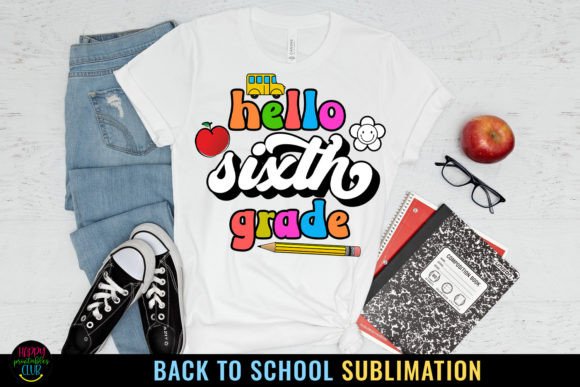
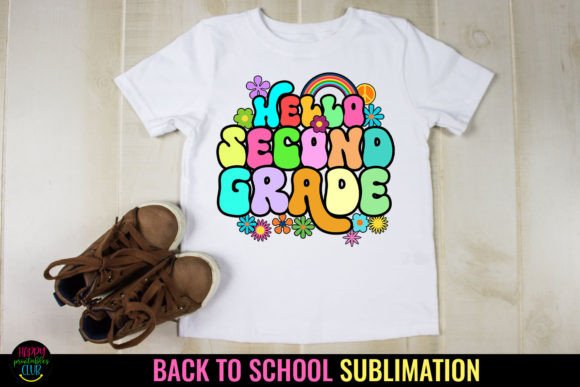
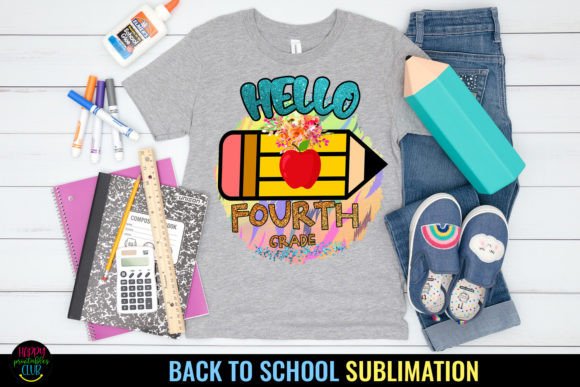
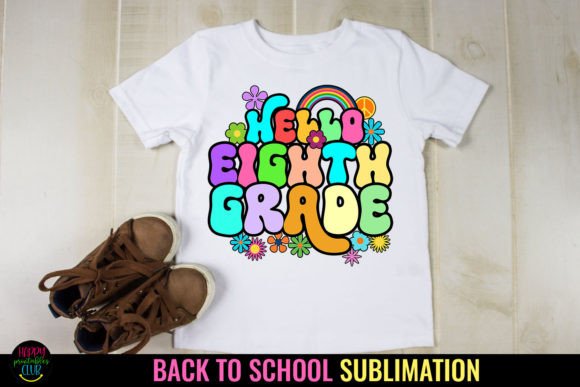
At its core, Hello Eighth Grade First Day School is a digitally optimized, high-resolution sublimation design crafted specifically to celebrate the pivotal transition into middle school’s final year before high school. It’s not generic back-to-school imagery; it’s intentional, age-specific, and emotionally calibrated. The phrase acknowledges both the student’s growth (“Eighth Grade”) and the ceremonial weight of the occasion (“First Day School”). Its clean typography, balanced negative space, and vibrant yet classroom-appropriate color palette make it instantly adaptable across physical products—from cotton tees worn on orientation day to reusable tumblers carried through science labs and lunch lines.
Unlike mass-produced clipart or overused stock motifs, this design was conceived with real-world application in mind: scalability without pixelation, color fidelity across substrates, and versatility across formats. The included 12 x 12 inch PNG at 300 DPI ensures crisp reproduction whether printed on a soft tri-blend t-shirt, heat-pressed onto a ceramic mug, or layered onto a custom notebook cover for a school supply bundle.
Fitting Into the Evolving Landscape of Educational Branding
Educational branding has undergone a quiet but significant evolution. Schools, PTAs, and district communications teams increasingly operate like micro-brands—curating tone, visuals, and messaging that reflect institutional values while resonating with digitally native students and their families. Meanwhile, independent creators and small-batch merchandisers are capitalizing on hyperlocal demand: think “Class of 2026” hoodies for a specific middle school, or “Eighth Grade Science Olympiad” water bottles sold exclusively at regional competitions.
In this context, Hello Eighth Grade First Day School functions as a strategic starting point—not an endpoint. It’s a modular, ready-to-deploy element that supports scalable personalization. For example, a freelance graphic designer working with a PTA can use the base PNG as a foundation, then add school colors, mascot accents, or a custom date stamp—without rebuilding from scratch. Similarly, a POD entrepreneur launching a “Grade Transition Series” (Kindergarten Kickoff → Sixth Grade Soar → Eighth Grade Hello) can maintain visual continuity while tailoring messaging per developmental stage.
Why Educators and Creators Are Prioritizing Context-Aware Designs
Today’s buyers—whether parents purchasing spirit wear or teachers sourcing classroom resources—have grown more discerning. They seek designs that feel authentic, not algorithmically generated. They value clarity of intent: a shirt that says “Hello Eighth Grade First Day School” communicates confidence, readiness, and belonging—without irony or ambiguity. That specificity builds trust faster than vague slogans like “Back to School Fun!” ever could.
This preference reflects deeper behavioral shifts. Research from the National Retail Federation shows that 68% of back-to-school shoppers now prioritize “meaningful purchases”—items tied to identity, achievement, or shared experience—over purely functional ones. Likewise, educators report increased demand for materials that affirm student agency and developmental milestones. A first-day shirt isn’t just apparel; it’s a tactile affirmation—a visible signal that “You belong here, and your journey matters.”
Operational Relevance: How This Design Aligns with Modern Workflows
The technical specifications of this digital download—ZIP file, single high-res PNG, no fonts embedded, no layered PSD—aren’t limitations. They’re deliberate optimizations for today’s most common production environments. Most POD platforms (Printful, Printify, Gelato), cutting machines (Cricut, Silhouette), and sublimation workflows require flattened, transparent-background PNGs. By delivering exactly that, Hello Eighth Grade First Day School eliminates friction: no font licensing concerns, no missing layers, no raster-to-vector conversion headaches.
Consider two practical scenarios:
- A school fundraiser coordinator uses the PNG to create a limited-run batch of tote bags and notebooks. She uploads directly to her preferred print partner, adds her school logo in the corner using Canva (no advanced software needed), and launches a pre-order campaign in under 90 minutes.
- A freelance educator creating a summer bridge program integrates the design into welcome packets—printing it on journal covers and laminated name tags. Because it’s 300 DPI and 12x12 inches, it scales cleanly to both A5-sized notebooks and 8.5x11 handouts.
Crucially, the absence of software support isn’t a gap—it’s alignment. Professionals in these roles already use industry-standard tools (Adobe Photoshop/Illustrator, Affinity Suite, Canva Pro, Cricut Design Space). What they need is production-ready assets—not tutorials. This design respects that expertise.
Color Consistency, Device Realism, and the Limits of Digital Previews
The note about color variance across devices isn’t boilerplate—it’s responsible disclosure. In professional print workflows, color management is a collaborative process involving ICC profiles, substrate testing, and calibration. A design viewed on a MacBook Pro’s P3 display will differ subtly from how it renders on a budget Android tablet or a wide-gamut Epson printer. By flagging this upfront, the creator empowers users to conduct their own test prints, adjust saturation or brightness if needed, and avoid assumptions about out-of-the-box accuracy.
This transparency reflects growing industry maturity. Platforms like Etsy and Creative Market now highlight sellers who provide detailed color guidance, substrate recommendations, and mockup examples—because buyers recognize that digital files are inputs, not finished products. Hello Eighth Grade First Day School fits squarely within that ethos: it’s a reliable input, designed for skilled execution.
Broader Implications: From One Design to a Systematic Approach
Looking ahead, the rise of milestone-specific, grade-targeted assets like Hello Eighth Grade First Day School signals a move toward systemic educational design thinking. Rather than treating each school year as a standalone event, forward-thinking creators are building interconnected visual libraries: consistent typography systems, coordinated color palettes across grade bands, and modular elements that combine seamlessly (e.g., “Hello Eighth Grade” + “Science Lab Edition” badge + “2024–2025” date stamp).
This approach mirrors trends in corporate learning design, where L&D teams develop “learning journey maps” with distinct visual signatures for onboarding, upskilling, and leadership development. Education merchandise is following suit—not as decoration, but as experiential infrastructure.
For entrepreneurs, this means opportunity beyond one-off sales. A well-executed “Eighth Grade Transition Bundle”—featuring the shirt design, matching notebook templates, editable digital certificates, and printable locker labels—creates recurring value and positions the creator as a solutions partner, not just a file vendor.
Final Thought: Intentionality as Competitive Advantage
In a marketplace saturated with generic back-to-school graphics, Hello Eighth Grade First Day School stands out not because it’s flashy—but because it’s precise. Its strength lies in its narrow focus, technical readiness, and contextual awareness. It doesn’t try to be everything to everyone. Instead, it meets a specific need—celebrating an exact developmental moment—with professional-grade execution.
That level of intentionality is becoming the quiet differentiator across creative industries. Whether you’re designing for classrooms, launching a POD store, or supporting district-wide initiatives, choosing assets rooted in real pedagogical insight—and built for real production workflows—isn’t just practical. It’s strategic. And in education, where every first day carries weight, getting the details right isn’t optional. It’s essential.