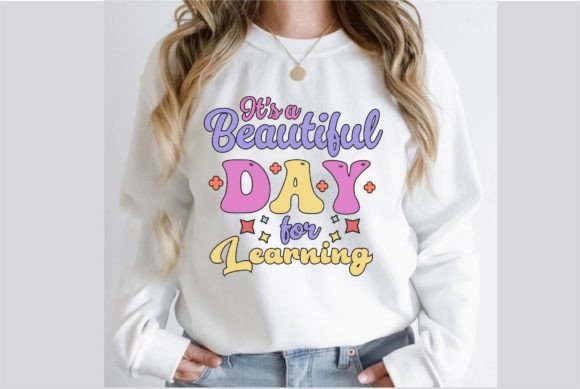
It’s a Beautiful Day for Learning Retro: A Versatile Design Resource for Educators, Makers, and Brand Creators
Retro aesthetics have surged beyond nostalgia—they’ve become a functional language of warmth, authenticity, and intentionality. In education, creative entrepreneurship, and everyday communication, the phrase It’s a Beautiful Day for Learning Retro captures more than a cheerful sentiment. It signals a thoughtful return to tactile engagement, playful structure, and human-centered design—qualities that resonate across generations and platforms. This SVG design collection embodies that ethos: not as a static image, but as a flexible, production-ready toolkit built for real-world application.
Why Retro Design Still Matters in Modern Learning and Creation
Retro visual language—think bold sans-serifs, sunburst motifs, hand-drawn borders, warm palettes of mustard yellow, avocado green, burnt orange, and cream—carries psychological weight. Research in educational psychology suggests that familiar, low-cognitive-load visuals reduce anxiety and increase approachability—especially for learners encountering new concepts or returning to study after time away. That’s why It’s a Beautiful Day for Learning Retro isn’t just decorative; it’s pedagogically grounded. Its shapes avoid digital sterility. Rounded corners, subtle texture overlays (embedded in vector layers), and balanced negative space invite attention without overwhelming.
Unlike trend-driven graphics that age quickly, this design leverages mid-century modern principles: clarity over complexity, function over flourish, and harmony over hierarchy. Each element is constructed with purpose—not merely styled. That intentionality translates directly into adaptability: whether printed on a kindergarten welcome banner or screen-printed onto a faculty appreciation mug, the integrity holds.
File Formats Designed for Real-World Flexibility
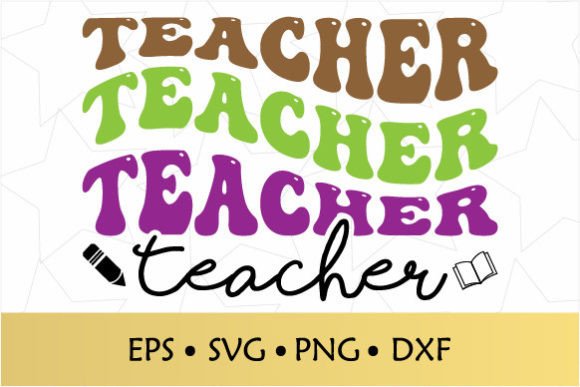
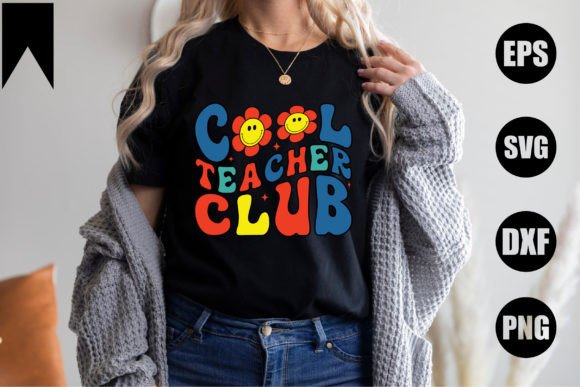
The package delivers four essential formats—SVG, JPG, EPS, and PNG—each serving distinct roles in a creator’s workflow:
- SVG: The foundational vector file. Fully editable in Illustrator, Affinity Designer, Cricut Design Space, or Inkscape. Every component—including text, icons, and background motifs—is composed of 100 discrete vector shapes, meaning you can isolate, recolor, resize, or delete any part without raster degradation.
- EPS: Industry-standard for professional print vendors. Preserves vector fidelity and embeds fonts where applicable—critical when sending files to commercial printers for large-format banners, school posters, or apparel production.
- PNG (transparent): Optimized at 4500×5400 pixels and 300 dpi, this version allows seamless layering over photos, textured backgrounds, or digital classroom slides. Ideal for virtual event invitations or social media announcements where background context matters.
- JPG (high-res): Also 4500×5400 at 300 dpi, this version ensures compatibility with platforms that don’t support transparency—like certain email clients or basic photo editors—while retaining crisp detail for physical printing.
No “muck up” files are included—only clean, production-ready assets. That means no hidden layers, no placeholder text, no embedded raster images masquerading as vectors. What you see in the preview is what you get: precision-built, logically grouped, and named intuitively (e.g., “sunburst-border”, “chalkboard-text-box”, “vintage-eraser-icon”).
Practical Applications Across Diverse Contexts
This design doesn’t live in isolation—it integrates fluidly into workflows spanning education, small business, and personal expression. Below are concrete use cases, grounded in how real users apply similar assets:
Educators and Academic Teams
A third-grade teacher uses the SVG to build a “Back to School” welcome slide deck—recolouring the sunburst motif to match classroom colors, then layering student names inside the retro speech bubble elements. The same file becomes a printable “Learning Passport” for goal-setting: each page features a different vintage-inspired badge (editable via vector fill), reinforcing growth mindset visually. Because the design is scalable to 300 dpi, it prints flawlessly on 11×17 cardstock for hallway displays or laminated desk tags.
Small Business Owners and Print-on-Demand Sellers
A boutique stationery shop licenses the design for a limited-run “First Day of Class” greeting card series. Using the transparent PNG, they composite the retro frame over hand-painted watercolor backgrounds—then export print-ready PDFs with bleed and crop marks. For t-shirt applications, they isolate the central “It’s a Beautiful Day for Learning Retro” wordmark in SVG, convert strokes to outlines, and run color separation tests with their DTG printer. The 100-shape architecture makes it simple to remove extraneous elements (like decorative corners) before prepping for garment printing.
Hobbyists and Scrapbookers
Scrapbookers value dimension and layering. With the EPS file opened in Silhouette Studio, a crafter cuts the sunburst from kraft paper, then uses the SVG’s vector paths to cut coordinating vinyl accents—layering them atop a polaroid-style photo mat. The high-resolution JPG serves as a guide for hand-tracing onto chipboard or embroidery hoops. Because all files share identical proportions and alignment points, switching between formats introduces no scaling surprises—a common pain point with poorly constructed bundles.
Digital Content Creators
An edtech YouTuber imports the transparent PNG into Canva to brand their “Back to School Tech Tips” video thumbnails. They change the headline font while preserving the retro layout grid, then animate individual vector elements (via Lottie or After Effects) for short-form social clips. The SVG’s modularity enables rapid A/B testing: one version highlights “Learning”, another emphasizes “Retro”, letting analytics determine which framing resonates most with their audience.
What Makes This Collection Stand Out Technically
Many retro-themed downloads promise versatility but falter in execution. This collection avoids three common pitfalls:
- No raster-based “vector” claims: Some sellers label flattened JPGs as “SVG” or embed raster textures inside vector files—compromising scalability. Here, every shape is truly vector, with smooth Bézier curves and consistent stroke weights.
- No locked or ungrouped chaos: Unlike bundles where objects are merged or layered non-logically, this set uses clear grouping (e.g., “background-elements”, “text-area”, “icon-set”) and naming conventions compatible with auto-tagging tools in Adobe Creative Cloud or CorelDRAW.
- No resolution compromise: The 4500×5400 pixel dimensions at 300 dpi exceed standard print requirements for 12×18” posters or full-bleed A3+ projects—giving room for cropping, resizing, or adding custom margins without quality loss.
And because color is applied via fills—not embedded swatches or global process colors—the design adapts effortlessly to accessibility needs: swap to high-contrast palettes for dyslexic readers, switch to muted tones for neurodiverse sensory environments, or shift to monochrome for tactile embossing projects.
Implementation Tips for Maximum Impact
To get the most from It’s a Beautiful Day for Learning Retro, consider these evidence-informed practices:
- Start with your output medium: If printing on fabric, prioritize SVG + EPS and verify Pantone equivalents. If designing for Instagram Stories, use the PNG and adjust canvas size to 1080×1920 before exporting.
- Test color shifts early: Retro palettes often rely on warm undertones that shift under fluorescent lighting. Print a small test swatch using your target paper stock or garment fabric before committing to bulk runs.
- Leverage vector intelligence: In Illustrator, use “Object > Path > Outline Stroke” before exporting for cutting machines—and always check “Use Artboards” to prevent stray off-canvas elements.
- Preserve intent in modification: When changing colors, retain relative contrast ratios (e.g., if the original uses dark text on light background, avoid flipping to light-on-light unless adding a drop shadow or stroke for legibility).
Finally, remember that retro works best when it feels lived-in—not sterile. Consider adding subtle imperfections: a slight rotation variance in duplicated icons, gentle noise overlay on JPG exports for analog texture, or handwritten annotations scanned and composited over the PNG. The design provides the foundation; your context gives it voice.
Looking Ahead: How This Fits Into Broader Creative Trends
As AI-generated imagery floods digital spaces, demand is rising for assets rooted in craft, constraint, and human decision-making. It’s a Beautiful Day for Learning Retro reflects that shift—not by rejecting technology, but by using it to amplify intentionality. Its 100-vector construction invites collaboration: educators co-design with students, designers partner with printers, hobbyists remix across mediums. That interoperability is increasingly rare—and increasingly valuable.
In classrooms, it supports multimodal learning: visual, spatial, and kinesthetic engagement through cutting, arranging, and recombining. In studios, it accelerates prototyping without sacrificing polish. And for individuals marking life transitions—whether returning to school, launching a side project, or welcoming a new academic year—it offers a quiet affirmation: that learning, like good design, is both joyful and deeply human.